What Happens to Food Waste After We Throw It Away?
Every day, food waste leaves our kitchens, restaurants, hotels, and farms. We throw it into a bin, and once the waste leaves our hands, it is easy to assume that the problem is gone.
But what happens to food waste after we throw it away?
The answer depends on where it goes and how it is managed.
Food waste does not simply disappear. It continues through a journey that can either create environmental problems or become part of a new resource cycle.
In a circular food system, organic waste can be transformed into something useful again. At Umah Pupa, we explore this approach by connecting food waste management, Black Soldier Fly (BSF) bioconversion, farming, and food production into one circular system.
The Journey of Food Waste
The journey of food waste usually begins at the source.
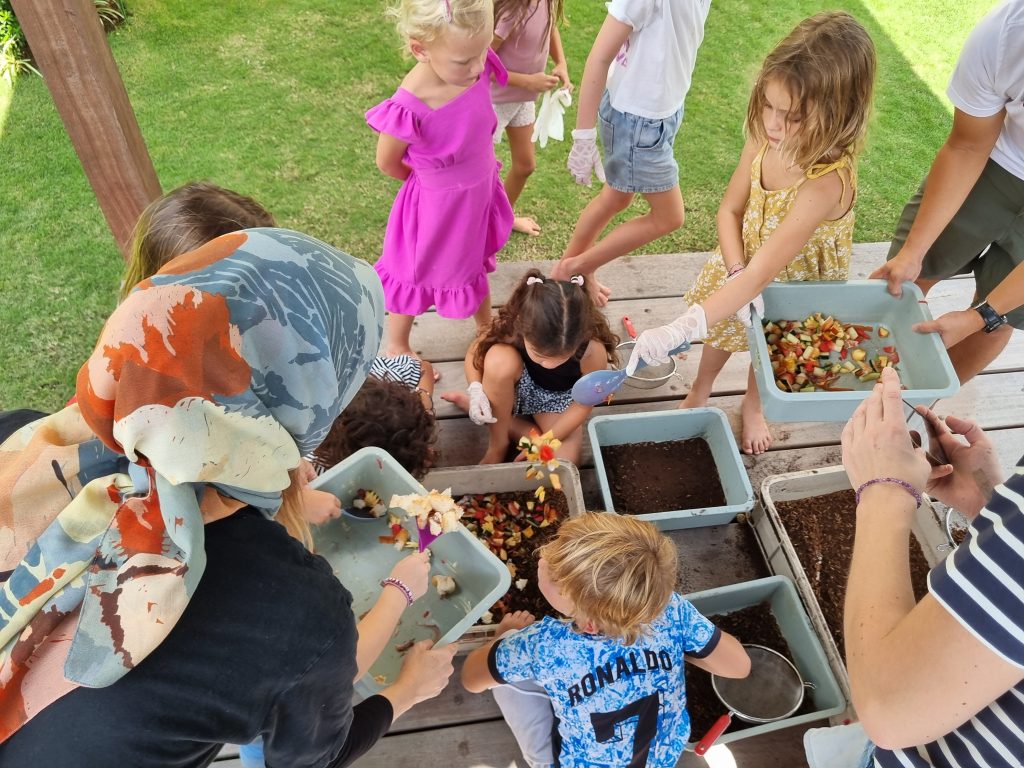
This can be a household kitchen, restaurant, hotel, market, farm, or food business. Food scraps such as vegetables, fruit, rice, and other organic materials are placed into a waste bin.
From there, the waste can take several different paths. It may be:
– Collected and transported to a waste facility
– Processed through composting
– Used for animal feed where appropriate
– Sent to a landfill
– Processed through biological systems such as Black Soldier Fly (BSF) bioconversion
The most important step actually happens before collection: sorting at the source.
When organic waste is separated from plastic, chemicals, metal, and other contaminants, it becomes much easier and safer to process. This is why effective organic waste management is not only about what happens at a processing facility. It starts with how we handle waste in our kitchens, businesses, and communities.
Why Organic Waste Matters
Food waste is different from many other types of waste. It is biodegradable, meaning microorganisms and other biological processes can break it down naturally. However, when organic waste is mixed with other waste and sent to landfill, its potential as a resource is often lost.
Instead of being returned to a productive system, valuable nutrients and organic matter become part of the waste stream. This creates an important question:
What if food waste could become a resource instead of simply becoming waste?
That is where better food waste solutions begin. By separating organic waste from the source, we create opportunities to process it through systems such as composting, anaerobic digestion, or BSF bioconversion. The goal is not simply to “get rid of” food waste. The goal is to keep its nutrients in circulation.
What Happens When Organic Waste Goes to Landfill?
When organic waste is sent to landfill, it is mixed with other forms of waste and buried. Under landfill conditions, organic materials can decompose without sufficient oxygen. This process can generate methane, a greenhouse gas with a much higher warming potential than carbon dioxide over a 100-year period. There is also a practical problem. Landfill space is limited. When organic materials that could have been processed separately are sent to landfill, they contribute to the overall volume of waste that needs to be transported and managed. This is why reducing organic waste at the source can be an important part of a broader waste management strategy. Instead of asking only:
“Where can we put our waste?”
we can begin asking:
“What can this waste become?”
Can Food Waste Become a Resource?
Yes.
Organic waste contains nutrients and organic matter that can be returned to productive systems when it is properly separated and processed. For example, food waste can be transformed through different biological processes into useful outputs.
One approach is Black Soldier Fly (BSF) bioconversion.
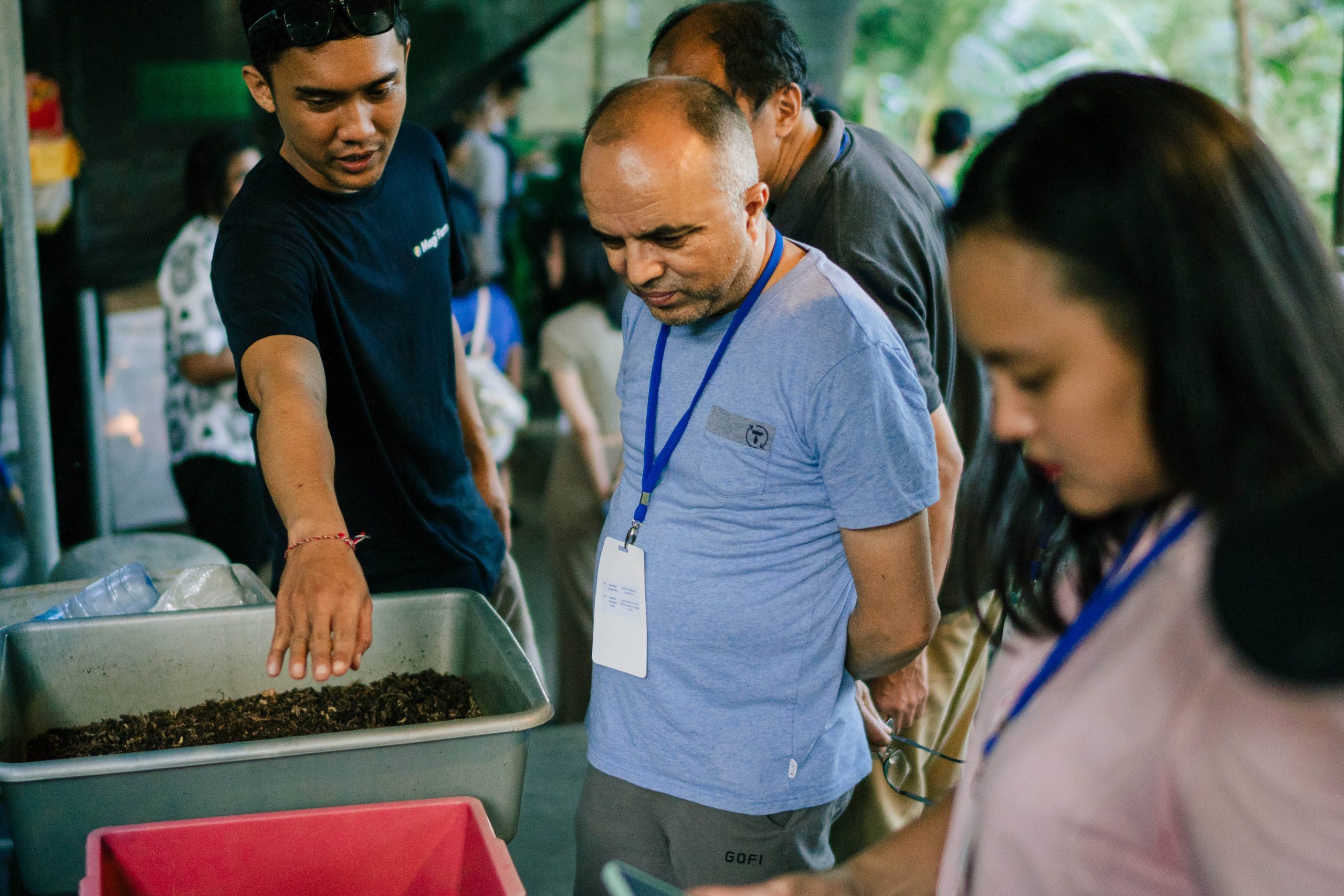
BSF larvae consume suitable organic materials and convert part of that material into larval biomass. The larvae can then be harvested and processed into products such as fresh maggot, dried maggot, or maggot meal for appropriate animal-feed applications. The remaining organic residue can also be used as a soil amendment or fertilizer product when properly managed. This creates a very different relationship with waste.
Instead of:
Food → Waste → Landfill
we can create:
Food → Organic Waste → BSF → Protein & Soil Inputs → Farming → Food
The waste becomes part of a cycle. From Food Waste to Protein. One of the interesting possibilities of BSF bioconversion is that organic waste can become a source of insect biomass. This is particularly relevant because livestock and aquaculture require significant amounts of feed.
Maggot BSF contains protein, fat, and other nutrients that can contribute to animal feed formulations. However, it is important to remember that nutritional composition varies depending on factors such as the larval diet, processing method, and production conditions.
For this reason, maggot is not necessarily a complete replacement for conventional feed in every application. Instead, it can become one component of a more diversified and locally sourced feed system.
You can learn more about the role of BSF in organic waste management in our guide:Panduan Lengkap Maggot BSF di Bali: Budidaya, Manfaat, dan Peluang Bisnis Ramah Lingkungan
Why Source Separation Is Important
Not all organic waste is suitable for every biological process.This is why source separation is essential. At the beginning of the system, organic waste should be separated from materials that may contaminate the process, such as plastics, chemicals, metals, and other unwanted materials.
For BSF systems, the quality of the incoming organic material can influence the quality and safety of the resulting biomass. In other words, good waste management starts before the waste becomes waste. It starts with the bin.
A restaurant that separates food scraps correctly is already participating in the circular system. A household that keeps organic waste separate is doing the same. Small actions at the source can create better conditions for the entire system downstream.
How Umah Pupa Approaches Food Waste
Ngayah & Ngolah (2)
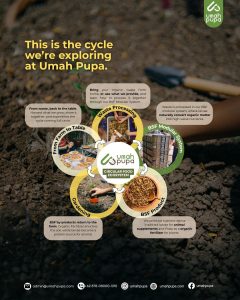
At Umah Pupa, we see food waste as part of a larger ecosystem rather than the end of a process. Our approach connects organic waste management, BSF bioconversion, farming, and food production.
Organic waste can be collected and processed through a controlled BSF system. The larvae then become a source of protein that can be used for appropriate animal-feed applications, while the residual material can support agricultural systems.
This creates connections between different actors. Hotels and restaurants can contribute suitable organic waste. Umah Pupa can process the organic material through BSF. Farmers and livestock producers can use outputs from the system. Food businesses can then become part of the next stage of the cycle.
The objective is not simply to process more waste. It is to create a system where resources remain useful for as long as possible.
From Waste Management to a Circular Food System
The cycle continues.
What This Means for Bali
This approach is particularly relevant in Bali, where food, tourism, agriculture, and waste management are closely connected. Hotels, restaurants, cafés, households, markets, and other food businesses generate significant amounts of organic waste. At the same time, Bali has a strong agricultural sector and a growing interest in sustainable tourism and responsible food systems. This creates an opportunity to connect the two. This is the foundation of a more circular relationship between food and waste.