What Is Circular Farming? How Food Waste Can Support Agriculture
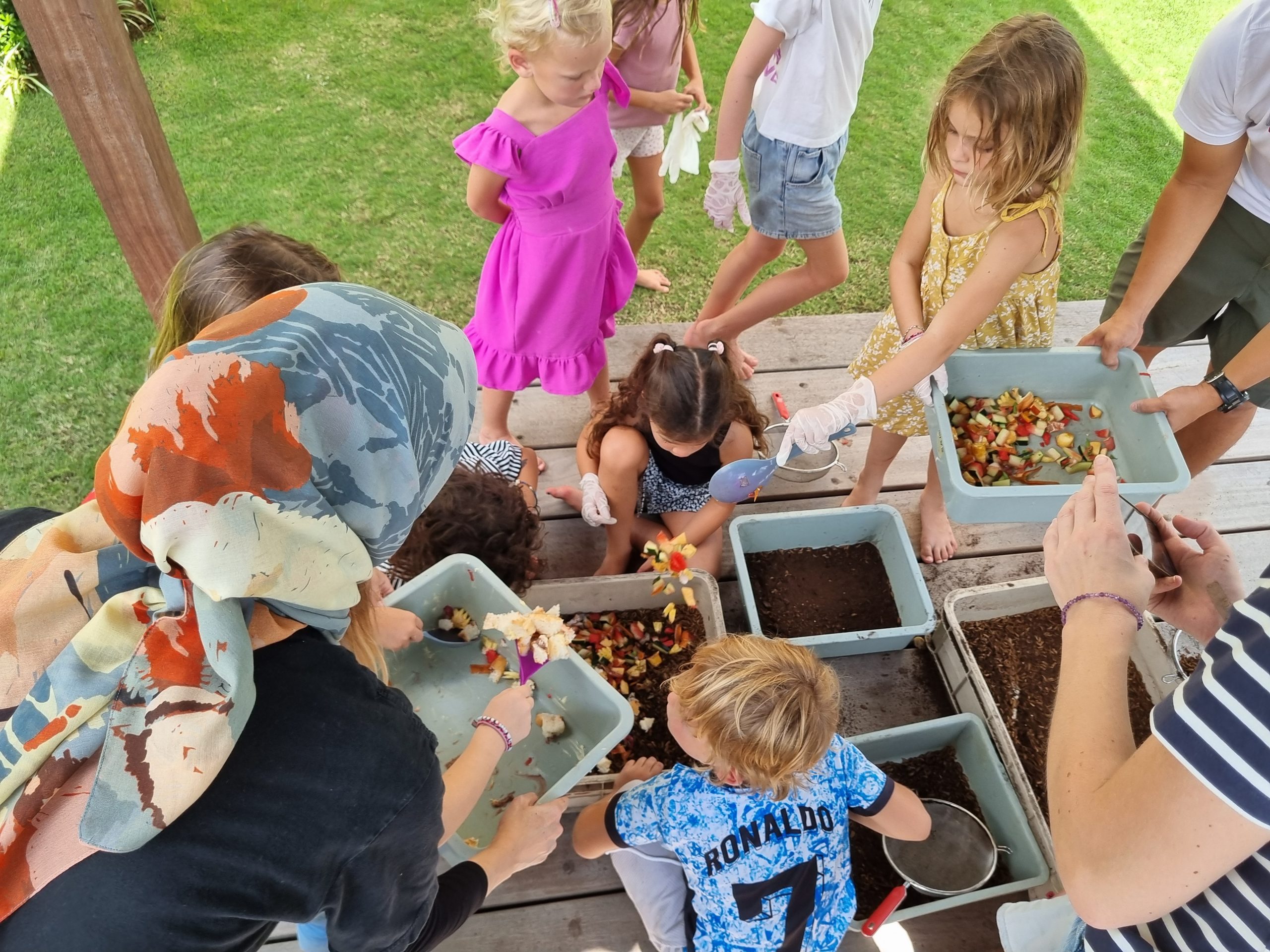
Farming and food waste are often treated as two separate issues. Farms need nutrients, while households, restaurants, hotels, and businesses produce large amounts of organic waste. But what if these two systems could be connected?
Circular farming offers a different approach. Instead of treating organic waste as something that needs to be thrown away, it sees waste as a potential resource that can return to the food system.
In a circular farming system, nutrients move in a loop: food is produced, consumed, and discarded as organic waste. That waste is then processed and transformed into useful resources, which can support farming again. In systems that use Black Soldier Fly (BSF), for example, selected organic waste can be converted into insect biomass and frass, creating new inputs for agriculture.
For Bali, where agriculture, tourism, food businesses, and waste management are closely connected, this approach offers an opportunity to rethink how food and resources move through the island.
What Is Circular Farming?
Circular farming is an approach to agriculture that aims to keep nutrients, materials, and resources within the food system for as long as possible. Traditional agriculture often follows a linear model:
Resources → Farming → Food → Consumption → Waste
Once food is consumed, the remaining organic material is often treated as waste and transported away. Circular farming tries to close this loop:
Farming → Food → Consumption → Organic Waste → Processing → Agricultural Resources → Farming
The goal is not simply to produce more food. It is to create a system where resources are continuously reused and fewer materials are lost. This can involve composting, regenerative agriculture, livestock integration, food waste processing, agroforestry, and insect-based bioconversion using BSF.
Linear vs. Circular Agriculture
The difference between linear and circular agriculture becomes clearer when we look at what happens to nutrients. In a linear system, A simplified food system might look like this:
Soil → Crops → Food → Consumer → Waste → Landfill
Nutrients are extracted from the soil and eventually leave the food system when organic waste is discarded. This creates several challenges. Farmers may need to continuously purchase external fertilizers and feed, while cities and businesses need to manage increasing amounts of waste.
In a circular system. The pathway can look more like:
Soil → Crops → Food → Consumer → Organic Waste → BSF / Composting → Feed & Soil Inputs → Farming
Instead of viewing organic waste as the end of the process, it becomes another starting point.This is the basic principle behind circular agriculture: keeping biological resources in circulation rather than allowing them to become waste.
The Role of Organic Waste in Circular Farming
Organic waste is often considered a problem because it decomposes quickly. However, it is also rich in nutrients and organic matter. Food scraps from households, restaurants, hotels, markets, and other food businesses can contain valuable biological resources. The important question is therefore not only:
“How do we dispose of food waste?”
but also:
“How can we safely return its nutrients to the food system?”
This requires proper organic waste management, starting with separation at the source. At Umah Pupa, organic waste intended for BSF processing needs to be separated from other waste streams. A dedicated container for organic waste helps reduce contamination from plastic, chemicals, and other unwanted materials.
Source separation is an important part of the circular system because the quality of the input directly affects the quality and safety of the resources produced afterward.
From Food Waste to Agricultural Resources
One of the interesting ways organic waste can re-enter the agricultural system is through Black Soldier Fly (BSF). BSF larvae can consume suitable organic materials and convert part of that material into insect biomass. The simplified process looks like this:
Organic Waste → BSF Larvae → Insect Biomass + Frass
The insect biomass can become a source of protein and other nutrients for appropriate animal feed applications, while the remaining organic residue, commonly known as frass, can be used as an agricultural soil amendment when properly managed. This creates two potential pathways from one organic waste stream.
Instead of:
Food Waste → Disposal
the system becomes:
Food Waste → Biological Processing → Feed + Agricultural Inputs
This is one reason BSF can play a role in developing more circular food systems.
Circular Farming and Soil Health
Circular farming is not only about producing alternative animal feed. It is also about maintaining the nutrient cycle within agriculture. Healthy farming depends on soil that can support plants over time. Organic matter and nutrients play an important role in maintaining soil quality. When organic materials are processed and returned to agricultural systems appropriately, they can contribute to the nutrient cycle. In a circular system, the objective is therefore to reduce the distance between:
what we consume → what we discard → what we grow next.
Rather than constantly extracting new resources, circular agriculture looks for ways to return existing resources to productive use. This does not mean every type of organic waste can be directly returned to soil or livestock. Proper sorting, processing, quality control, and appropriate application are essential.
Umah Pupa’s Circular Farming System
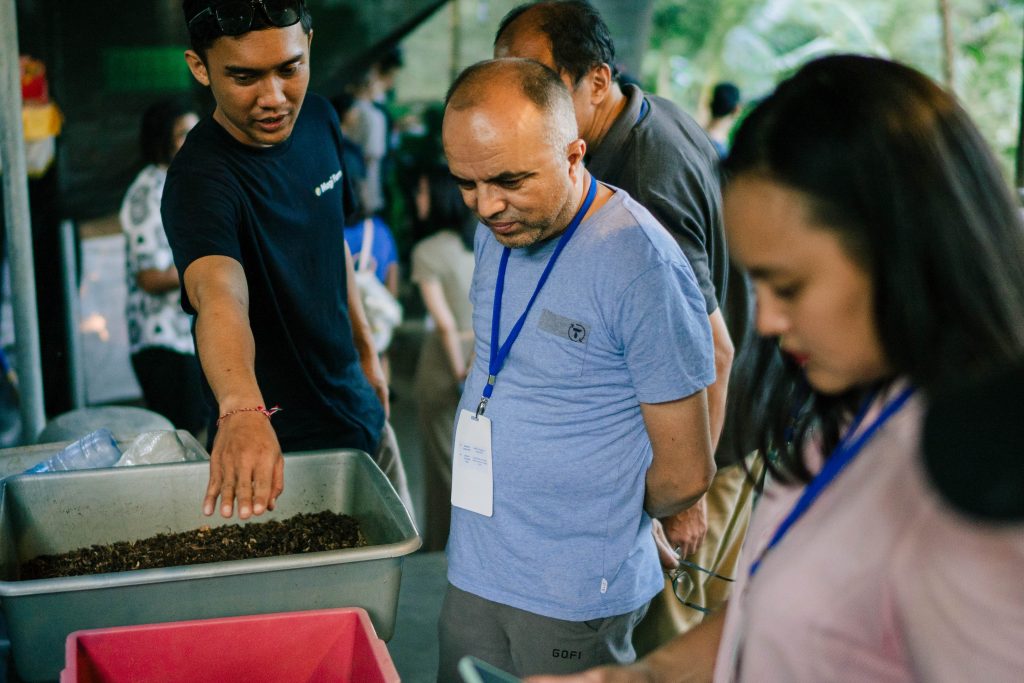
At Umah Pupa, circular farming is connected to a broader circular food system. The process begins with organic waste generated by food-related activities. Suitable organic waste can be collected or brought to the system and then processed using BSF. The larvae transform the organic material into insect biomass, while the remaining material can be utilized within agricultural applications.
The cycle then continues through farming. Plants can be grown, harvested, prepared, and shared or consumed. Food businesses such as hotels and restaurants can participate as both contributors and users within the system. This creates a network where different actors can play different roles:
Hotels & Restaurants
↓
Organic food waste
↓
BSF Processing
↓
Maggot / agricultural resources
↓
Farm & Livestock
↓
Food production
↓
Hotels, Restaurants & Communities
↓
Organic food waste
↺
The important part is that the system does not see waste management, farming, food production, and consumption as isolated activities. They become connected parts of the same ecosystem.
Why Closing the Loop Matters
Closing the loop can create benefits beyond waste reduction.
1. It reduces organic waste going to disposal
When suitable organic waste is processed at the source, less material needs to enter conventional waste management systems.
2. It keeps nutrients in circulation
Instead of losing biological resources after consumption, circular systems create opportunities to return them to agriculture.
3. It creates local resources
BSF can transform suitable organic waste into insect biomass, creating a potential local source of feed ingredients.
4. It connects waste and food production
The people producing food waste can become part of the same ecosystem that produces agricultural resources.
5. It encourages more responsible consumption
Circular farming makes the relationship between what we eat, what we throw away, and what we grow again more visible.
For Bali, this connection is particularly relevant. The island has a strong agricultural tradition while also supporting a large tourism and hospitality sector that generates significant amounts of food waste. Circular farming provides a way to connect these systems rather than managing them separately.
Experience Circular Farming at Umah Pupa
At Umah Pupa, circular farming is something that can be experienced, not only explained. Through our Farm Experience, visitors can get closer to the processes behind a circular food system—from organic waste processing and BSF to gardening, harvesting, and understanding how different parts of the farm are connected. It is an opportunity to see that waste does not always have to be the end of the story. Sometimes, it can be the beginning of another cycle.
Come experience how waste, farming, food, and people can be connected through a circular system at Umah Pupa.
Explore More
If you want to understand the bigger picture behind this system, read our article: What Is Circular Living? A Practical Guide to Food, Waste & Farming
You can also explore our articles about: Black Soldier Fly (BSF): Solusi Pengelolaan Sampah Organik Berkelanjutan di Bali
These articles help explain different parts of the circular food system—from where organic waste comes from to how BSF can transform it into valuable resources.
Final Thoughts
Circular farming asks us to rethink the relationship between food, waste, and agriculture.. Instead of seeing food waste as the end of a linear process, we can see it as a potential resource that can support another cycle of production. Through proper source separation, responsible organic waste management, BSF bioconversion, farming, and local food production, different parts of the food system can become more connected.
For Bali, this approach creates an opportunity to build a food system that is not only productive, but also more resource-conscious and circular. Because the goal is not simply to produce food. It is to keep the resources that produce our food moving.